Day 1 - Arrive in Poland
We will depart in the morning from Shannon to Warsaw, Poland. On arrival, we will be greeted by our Marian
Pilgrimages guide and driver who will remain with us for the duration of our pilgrimage. Coach transfer to Krakow
and check in to the hotel for 6 nights, dinner, bed & breakfast. After arrival, we will have a quick introduction to
Krakow City and have some free time before returning to the hotel for dinner.
Day 2 - Krakow
This morning, we have a tour of Krakow including a visit of Kazimierz and the Dominican Church. Krakow, the
ancient capital of Poland, has been settled since the Stone Age. In 1038, the city became the capital, and Polish
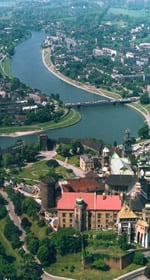
monarchs took up their residence in its Wawel Royal Castle which we visit. The Old Town historical district in
Krakow's heart is actually the medieval city established in 1257, by Prince Boleslav V, the ruler of Poland at the time.
Krakow has preserved its original grid of streets arranged around the huge central Grand Square, with the
Cathedral Church of St. Waclaw and Bishop Stanislaus. In the middle of the square is the Cloth Hall, built before
1349, and altered in the 16th century. Inside are many shopping stalls, which we will be sure to visit. The Cloth Hall
sits in the shadow of the magnificent gothic church of Our Lady with the famous wooden altar created by Wit
Stwosz. We will take a short coffee break at the famous �Jama Michalika.� This coffee shop is popular for its unique
history with artists, writers, and other entertainers who have decorated its walls with various drawings, pictures,
and other stained-glass renditions. At Krakow University, we will see the first map of the world depicting North
America as a continent. We will also pass by the shoe factory where young Karol Wojtyla worked during the Nazi
occupation of Poland. We will have the opportunity to walk down Kanonicza Street, passing by some of Krakow's
historical buildings. We pause at building 21, �Deanery� where Pope John Paul II resided while in Krakow. We then
proceed to Market Square where we visit the Mariacki Church. We take some time for lunch on our own. This
afternoon we will visit the Franciscan Church. The Franciscan Order arrived in Krakow in 1237. A monastery was
founded on this site of the town, and in 1260 work began on a church. Here we celebrate Mass. Back to the Hotel
for Dinner.
Day 3 - Wieliczka Salt Mine
After breakfast, we venture just beyond the city of Krak�w to one of Poland's most remarkable treasures� Wieliczka
Salt Mine, a UNESCO World Heritage Site that has quietly captivated pilgrims and visitors for centuries. In continuous
operation since the 13th century, the mine plunges deep beneath the earth and spans over 300 kilometres of
subterranean tunnels and passageways, though only a small section is open to the public. Our guided journey begins
65 metres below ground and gradually leads us to a depth of 135 metres. Along the way, we walk through vast caverns,
underground saline lakes, and chapels carved entirely from rock salt by the miners themselves�men of faith and
incredible craftsmanship. At the heart of the mine lies the magnificent Chapel of St. Kinga, a cavernous cathedral
sculpted into the salt, complete with glowing chandeliers and biblical scenes carved into the walls. It is a place of silent
awe where the faith of those who worked here is etched into every surface. As we move deeper into this hidden world,
the mine reveals not only geological marvels but a powerful testament to human resilience, devotion, and ingenuity.
It stands as a living monument to the generations who, while labouring in darkness, created spaces of prayer and
praise beneath the earth's surface. After the visit, we return to Krak�w for dinner and overnight, carrying with us the
quiet reverence of what lies below.
Day 4- Czestochowa & Jasna Gora Sanctuary
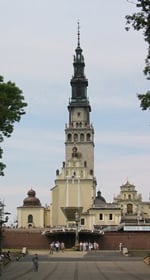
The Jasna Gora Monastery in Czestochowa is one of the most revered religious sites in Poland. For centuries, pilgrims
have journeyed here to venerate the icon of the Black Madonna - a painting believed to have miraculous powers and
symbolic importance in Polish history. The fortified monastery complex includes the basilica, treasury, and defensive walls, bearing witness to both spiritual devotion and national endurance, especially during the Swedish Deluge. Jasna
Gora is also a symbol of Polish identity and perseverance, offering strength in times of challenge. Each year, on
August 15th, thousands of pilgrims arrive on foot to celebrate the Feast of the Assumption of the Blessed Virgin
Mary. The monastery continues to unite faith and national spirit, standing as a living testament to hope and
devotion.
Day 5- Divine Mercy & Lagiewniki Divine Mercy Sanctuary
This morning, pilgrims awaken in the historic heart of Krakow, where centuries of faith meet modern devotion. After
breakfast, the group will gather and make their way to the Sanctuary of Divine Mercy, located in the city's Lagiewniki
district�now recognized as the spiritual centre of Divine Mercy devotion around the world. It was here, in the quiet
convent chapel, that Saint Faustina Kowalska received the mystical revelations that would echo across the globe,
culminating in the institution of Divine Mercy Sunday. The day begins with time for personal prayer at the original
convent chapel, where the Tomb of Sister Faustina is below the mensa of the altar of the Merciful Jesus. The little
coffin made of white marble holds her mortal remains, and there is a relic in a marble reliquary in front of the altar,
for pilgrims wishing to venerate. A sense of sacred silence pervades the space, and pilgrims often find themselves
profoundly moved in the presence of her tomb. The chapel, still used by the Sisters of Our Lady of Mercy, preserves
an atmosphere of intimacy and contemplation rarely found at major shrines. Later in the morning, the group will
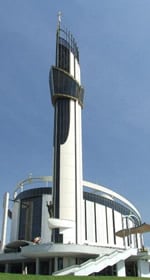
proceed to the striking Basilica of the Divine Mercy, a soaring modern church consecrated by Pope John Paul II in
2002. Designed to accommodate the growing number of pilgrims from all corners of the world, the basilica stands as
a beacon of Christ's mercy.
Day 6- St. John-Paul
�Here it all began,� said Pope John Paul II when visiting Wadowice - his hometown - in 2002. This small town played
a vital role in shaping the life and values of the future Pope. The Family Home Museum of John Paul II is located in
the house where he was born in 1920 and where he spent his early years. Its centrepiece is the modest apartment
rented by the Wojtyla family, preserved with original furniture and personal belongings, including his mother Emilia's
hand-made lace napkins, her handbag and locket, and family photographs. Just steps away stands the church where
Karol Wojtyla was baptized and served as an altar boy - the Basilica of the Presentation of the Blessed Virgin Mary.
This place of worship was central to his spiritual development and remains a key stop for visitors. The town itself,
with its quiet streets, school buildings, and caf� he once visited, offers a moving glimpse into the early life of one of
the 20th century's most influential figures. This combined tour connects two places deeply tied to Pope John Paul II.
Young Karol Wojtyla often walked to the nearby Kalwaria Zebrzydowska sanctuary - now a UNESCO-listed pilgrimage
park with baroque architecture and a series of devotional paths modelled after Jerusalem. The sanctuary, built in the
17th century, blends natural landscape with sacred architecture, creating a powerful spiritual experience. Together,
these sites form a journey into Polish faith, culture, and personal history.
Day 7 - Depart
Early transfer to Wroclaw Airport for our return flight home.
|
 |